trusting God.

trusting God.

In Proverbs, the Bible says:


Trust in the LORD with all your heart and lean not on your own understanding;
In all your ways acknowledge him and he will make your paths straight.


Two things stand out to me.


1. Don’t try to understand everything.
2. Straight paths don’t mean everything will happen the way you want.

We don’t like that.

Do you understand how the universe was formed? Or how a baby is formed in the womb? Or how birds migrate?

Yet, we want to understand the bad things that happen in our lives.

God doesn’t leave us without comfort. He promises us that one day we will understand. He promises us that he will give us comfort and strength to endure the pain we suffer in life. He promises he will wipe away every tear.

For now though, he gives us the strength to endure. The one who created the universe is able to do that.

In this instant gratification world, you are not going to understand. God makes it clear and he tells us to trust him.

I get it. You have heard claims made of God’s love and when things go sideways in life, you want to make sense of it. We even hold God accountable: “If this is how God loves I don’t want any part of him.”


Isn’t it interesting how we get on Amazon and look at all the reviews before a purchase? We research the next car, stove, and exercise equipment before buying. We try to figure everything out so everything will work out.

But this. Eternity. The most important “purchase”.

God has already created us to know eternity is real.


He has set eternity in the human heart; yet no one can fathom what God has done from beginning
to end.

We pay more attention here rather than there. When you live consistently with an awareness of eternity … trusting God will be a simple concept.

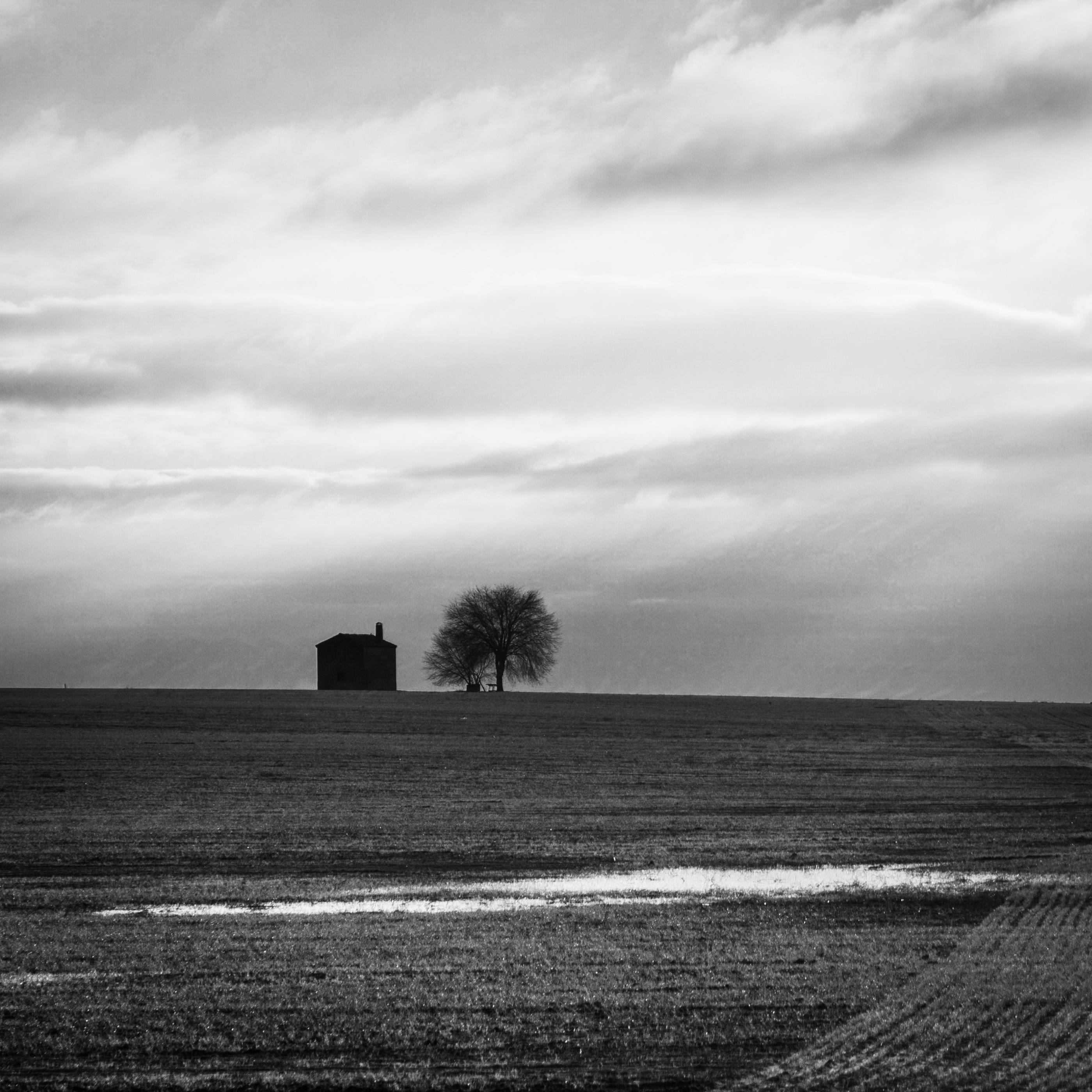
Photo by Billel Moula on Pexels.com

context.

context.

I had a thought this morning.

We are not all okay.

In other words, we think this person or that person is doing well because they look happy.

Not true.

Everyone of us have something on our minds. A place in our hearts or minds that have this empty space of disappointment, sadness, loss.

Then I began to think about people who lived throughout the centuries and what kind of life they had. Particularly, I thought about the pioneers who explored and the settlers who settled. The day to day, mundane, unpredictable existence they experienced.

Their world view was limited. Each day they had purpose and found a life of contentment in what they did. How do I know this? Because it’s in all of us. The ability to be content in undesirable situations. God created us and he put it in us. Some call it human potential or resiliency because you don’t have to be a Christian to have it. Most of us have the ability to get up, brush ourselves off, and keep going.

Fast forward to 2025. Look at all we have. Now compare yourself to them.

Are we any different? Obviously, we have amazing advancements in medicine and technology. And certainly, that has impacted our physical and mental compacity to not only have knowledge, but solutions, and the ability to exceed in ways that our predecessors never had.

Yet, inside, we are the same. We experience all of the emotions to life’s challenges.

That is context.

All of my life, I have taken a step back to consider the men and women who suffered throughout the centuries. It has given me inspiration, courage, and perseverance. What God has put in all of us can only be enhanced by knowing him through the promises of the scripture.

It reminds me of Hebrews 11, often referred as the faith chapter; a list of men and women who endured suffering. They endured because they saw things in context – that their suffering and ultimate death was not the end. They knew that God promised what was waiting for them in eternity.

Then Hebrews 12:1:

Therefore, since we are surrounded by such a great cloud of witnesses, let us throw off everything that hinders and the sin that so easily entangles. And let us run with perseverance the race marked out for us; fixing our eyes on Jesus, the pioneer and perfecter of faith. For the joy set before him he endured the cross, scorning its shame, and sat down at the right hand of the throne of God.

Not only does remembering the bigger picture step us out of our small thinking, exasperated by our tendency to be overly focused on ourselves, but it gives us the reason for context: there is an end to the story.

Get context.

it’s all i’ve got.

it’s all i’ve got.

There are no words for what happened in Kerr County, TX, last week.

No words of comfort.

No words of closure.

No words that will stop the hemorrhaging or heal the shattered hearts.

In recent months, I was finally beginning to understand what God thinks about me. Maybe it has been a series of events of being abandoned that has taken me this long. I don’t dwell on that but I’ve spent a lifetime searching for meaning. All I know is I was beginning to relax in knowing that God really does value me, really does love me, and will not abandon me.

I was finally coming to a place of reassurance and peace. And then came this. The little girls ripped from their beds, carried away in horrendous fear, and ultimately, death.

Jesus loves me, this I know? Why didn’t he stop it? What is this thing Christians believe?

I am still in the process of trying to figure this out. I want so desperately to comprehend. I am frustrated because there is nothing that makes sense.

I ask God the question: how can I trust you? How can I believe that it is you who are helping me through life’s confusion and difficulties? How can I really believe that you are in tune with my life and that you hear my prayers? Obviously, the parents who left their little girls at this camp prayed for them – among other things – their safety.

And then of course, the triggers of emotions buried within me. I uttered these words so quietly: and you betrayed us. The tears welled up in my eyes of losing him 20 years ago. Tears that cannot fully come because I’ve cried so many there is nothing left. I want to cry. I can’t. But I feel it churning inside.

I remember when the disciples were confused and Jesus said to them, “Will you leave me, too?” And Peter piped up and said, “Where will we go? You have the words of life.”

You have the words of life.

Peter was right. No matter what we face in this world with all of its disappointments, sorrow, and confusion – where do we go? We can find temporary solutions but that is the problem. They are temporary. And we wake up the next morning with a hangover or guilt from the night before and what do we do? We go back for more.

You have the words of life.

But I can’t see you, God. And even though my mind tells me that I am seriously limited in trying to understand, it still hurts. 

I know people have suffered since the beginning of time. I know people are suffering today. But this. This hit me hard.

The Bible says God’s ways are not our ways and that his thoughts are not like ours. If we step back and believe he created the universe and everything in it, how can we possibly believe we can understand the why’s of suffering. It’s far too easy to say there is no God if he allows us to suffer. I cannot go there because then, I will find solutions elsewhere and honestly, there is nothing that will help. Every human solution I can think of often makes things worse.

All I have is this:

God says he will keep us in perfect peace when we trust him.

He says to trust him with our whole heart and not try to understand.

He  promises to fix it all someday by wiping away every tear we’ve cried.

That’s all I’ve got.

And Christians throughout the centuries – that’s all they had, too.

Photo by David Bartus on Pexels.com

books.

books.

Books.

So many books have been written about how to live the Christian life.

I’m not opposed to the offering of knowledge, understanding, or personal experiences.

Yet, over the years, I have been very selective only because there is this thing about me – not wanting to jump on bandwagons – expecially when it’s a book everyone is reading.

I’m cautious about trendy things. I think about this scripture found in 2 Timothy:

For the time will come when people will not tolerate sound doctrine, but according to their own desires, will multiply teachers for themselves because they have an itch to hear what they want to hear.

If we’re honest, it’s human nature to gravitate to an easier way. Sometimes I think many contemporary Christian books do this unknowingly through appealing to our soul (intellect, will, emotions) first which will then hopefully affect our spirit second. This isn’t necessarily bad but I wonder if authors can appeal to our spirit first?

Many Christians understand the “natural” or “carnal” man which is our soul. They know being a Christian means to “crucify the flesh” with all it’s worldly desires which are in direct opposition to the scripture. I think many are weary of what they have defined as a continual battle.

Instead of thinking about winning a battle, how about focusing on strengthening the spirit?

We don’t have to live a life of suffering in order to mature as a Christian. There are times of suffering but there is also this truth found in Proverbs:

The blessing of the LORD enriches, and He adds no sorrow to it.

I’m saying the Christian faith requires some serious thought. It challenges us. It confronts us. And the soul (intellect, will, emotions) may feel some suffering to turn away from sin and choose God’s ways.

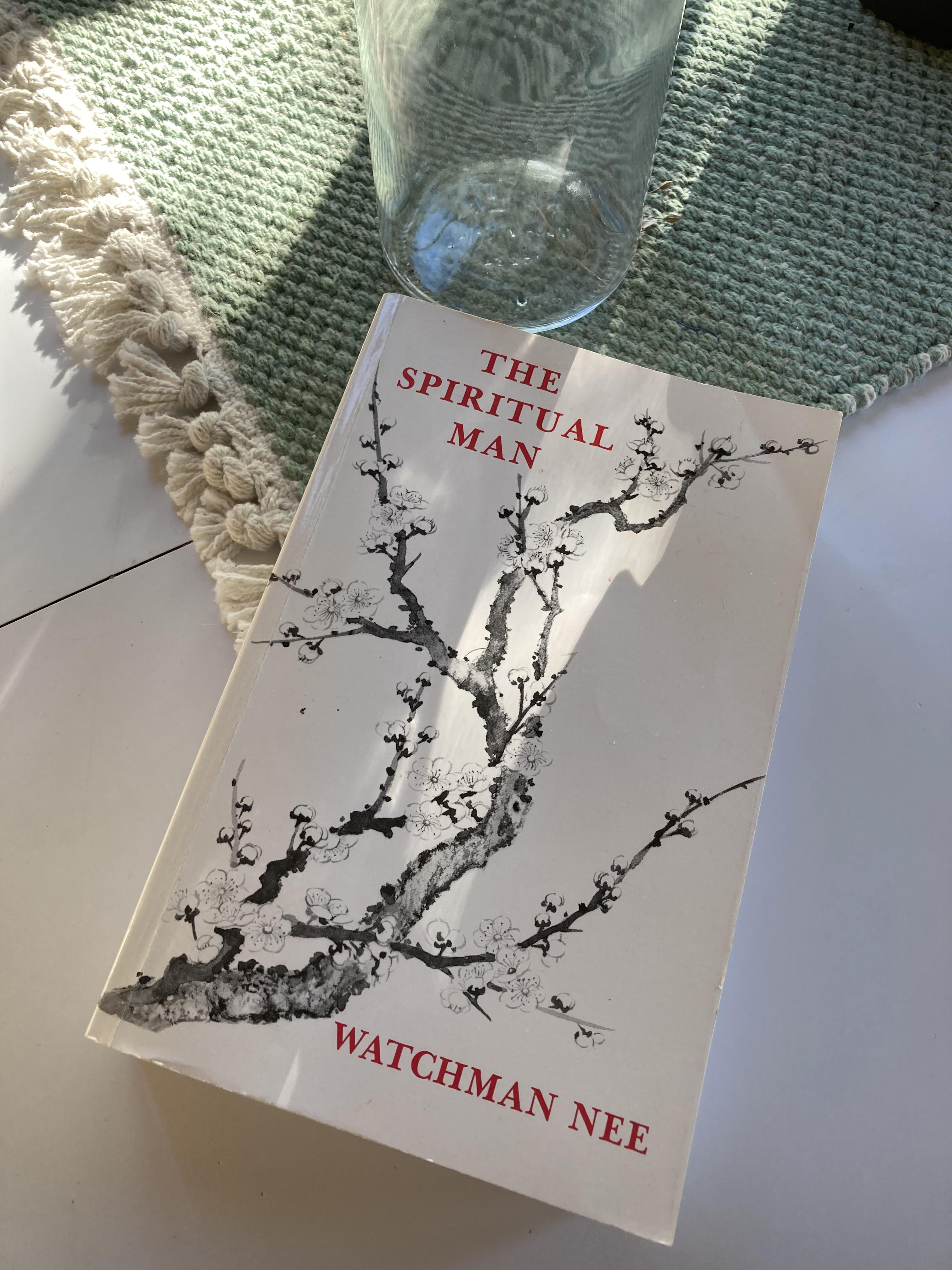
The Spiritual Man by Watchman Nee, written 92 years ago, explains the three components of every human being: spirit, soul, and body.

According to Nee, our soul (intellect, will, emotions) joins the spirit and body. The soul makes it possible for the spirit and the body to communicate and cooperate.

Spirit: The spirit part of us is awakened when it connects through being reconciled with God through Jesus Christ. The spirit part can also connect with Satan wherein we find witchcraft, et al.

Soul: The soul is our intellect, will, and emotions. We use these everyday. Nee says, “ … he [man] is still powerless to uncover the Word of life by his much thinking and theorizing. How untrustworthy are human reasonings! … without the guidance of the Holy Spirit intellect not only is undependable but also extremely dangerous because it often confuses the issue of right and wrong.”

Body: Our actions seen by everyone communicated through either our spirit or our soul (intellect, will, emotions).

Which one dictates the most in our daily lives? Is our soul determining more than it should and is it what causes our continual daily struggles? Always learning but never coming to the knowledge of the truth?

I have learned about our spirit, soul, and body in a church setting. One sermon might deal with our emotions or another about being led by the spirit and not the flesh. I don’t remember learning about all three together in the way Nee presents it.

Learning, and most importantly, wanting to yield to the spirit instead of the soul is life changing. Christians understand “obeying God” or “submitting to God” but too many of us have viewed it as a life long struggle. We view it as the old cartoons with the angel on one shoulder and the devil on the other shoulder. Everyday we are presented with choices (gossip, lying, gluttony, etc.) and we should listen to the angel, right? But if we listen to the devil, well, God loves us and forgives.

Yes, He does forgive. But we are delaying the work in our spirit maturing us.

God wants us to be free from everything that entangles us. Instead of living with daily battles of the soul, we learn to draw from our spirit. As our spirit matures, the stronger we become as we face life with all its challenges. We experience peace, joy, contentment, and more.

It becomes a lifestyle of abiding in the vine.

We may soon forget what we read in the newest book, but when we allow God to mature our spirit through yielding our intellect, will and emotions, we will have all we need on this side of eternity.

the uniqueness of Jesus Christ.

the uniqueness of Jesus Christ.

“Christianity is unique among world religions, and Christ’s true uniqueness is the centerpiece of Christianity. The truth about Christ is based primarily on the New Testament documents which have been shown elsewhere to be authentic. The New Testament record, especially the Gospels, is one of the most reliable documents from the ancient world. From these documents we learn that numerous facets of Christ are absolutely unique.”

Christ offers a better way of salvation. Unlike the God of Islam, the God of the Bible reached out to us by sending his Son to earth to die for our sins. Muhammad offered no sure hope for salvation, only guidelines for working oneself into Allah’s favor. Christ provided all that is needed to get us to heaven in his death, ‘For Christ also died once for all, the just for the unjust, in order that he might bring us to God’ (1 Peter 3:18).

Christ teaches a better way of salvation. The Hindu is lost in the karmic cycle of reincarnation until he reaches moksha and is left to work the way out of this maze alone. Jesus promised that we would be saved by faith (Ephesians 2:8–9; Titus 3:5–7), and that we could know that our salvation is guaranteed (Ephesians 1:13–14; 1 John 5:13).

Christ offers a better way of salvation. The Buddhist also teaches reincarnation as the means of salvation. However, in this form the self or individuality of the soul is eradicated at the end of each life. So even though you live on, it is not you as an individual who has any hope of attaining nirvana. Jesus promised hope to each man and woman as an individual (John 14:3) and said to the thief on the cross beside him, ‘Today you shall be with me in paradise’ (Luke 23:43).

Read more here.

Has any founder of a religion died for you? Without any more for you to do except open your hands and take the gift of salvation?

Or do you have to work to follow all kinds of rules and such?

Do you work for a gift someone gives you? Or do you receive it with gratitude?

What follows is what God wants to give you.

What you give him is your love.

It is finished.

easter

Photo credit: abcdz2000 via Foter.com / CC BY-NC-S

on Christianity.

on Christianity.

Some people think Christianity is for the weak … a crutch.

If that’s the case, I am weak.

I’m not talking about a particular denomination or church.

I’m talking about Jesus Christ and him crucified. Period.

Until you find yourself in full desperation and devastation, you might think you don’t need God.

I don’t fully comprehend how, but I know that running to God is the best place to go when you’re hurting.

If you don’t want God because you blame him for your demise in the first place, you will be suffering even more.

Why not go to the One who sees and knows more than our finite minds understand?

Why not go to the One who knows how to fix things?

World Bank Photo Collection / Foter / CC BY-NC-ND

sacrifice.

sacrifice.

Sacrifice is when we care about others over ourselves.

It may be giving our time, money, or possessions. It’s almost always doing the opposite of what we might choose to do with those things.

It costs us something because it draws from a depth of caring that is very close to our heart. We feel the withdrawal from our soul and it can be painful. Yet, it turns out to be a joy to know our sacrifice made a difference for someone.

Even if they don’t know about it.

What if the recipient of your sacrifice isn’t grateful for their circumstances changing because of you? That is part of your sacrifice.

It hurts when you know what you’ve given and it is not appreciated. And sometimes, it’s even thrown back in your face.

sacrifice

If you’ve wondered about Christianity, that’s really what it’s all about. Jesus gave his heart to the world. He sacrificed himself and endured the cross because of the joy that awaited him.

When you sacrifice it is noticed by God. Don’t focus on the pain. Focus on the joy that comes from sacrifice.

~~~

Photo credit: aussiegall / Foter / Creative Commons Attribution 2.0 Generic (CC BY 2.0)


sorry.

sorry.

Sometimes, we’re the one who causes pain.

When I think in those terms, I am not so ready to be angry at someone who has hurt me.

This is humility.

humility-1_l

Humility is taking your rightful place in God’s creation, yet, submitting yourself to the bigger picture.

We don’t say we’re sorry enough. Far too often, we make it about us and our feelings. Our feelings count. But so do the feelings of others.

In Christianity, the focus is on loving God and your neighbor. Jesus said these were the greatest commandments and if you are doing this, “the rest” will fall into place.  If you think about it, it’s because all of our thoughts, words, and actions are affecting God or our neighbor.

When you give and don’t think about yourself first, you are a happier person.

Challenge:  For the next 7 days, say you are sorry to one person every day.  See how humble it makes you feel.

~~~

Photo credit: ToniVC / Foter / CC BY-NC-ND